
Biography
The Three Seas
The extraordinary talents comprising The Three Seas converge from diverse cultural backgrounds, bound by a profound love for music and a shared commitment to crafting transcendent sonic experiences. Live performances by the band serve as gateways to a mystical realm, inviting audiences to immerse themselves in an otherworldly journey.
At the helm of The Three Seas is Australian composer and saxophonist, Matt Keegan. His quest for new sonic horizons led him to India in 2009, where fate brought the ensemble together in the enchanting town of Santiniketan, West Bengal. The fusion of their distinct cultural backgrounds and immediate musical rapport birthed the energetic and uplifting musical fusion of The Three Seas.
Fronting the ensemble is Baul singer Raju Das, whose resplendent voice and radiant stage presence are heightened by his mastery of the khamak, and its danceable rhythms. Hailing from a nomadic tribe with a rich cultural heritage and their own language, Raju’s family has passed down these traditions with a deep emphasis on spirituality and a heartfelt focus on the vast energetic presence within the human body, as expressed through song and dance. These spiritual traditions inspired The Three Seas’ modern interpretations of ancient Baul songs that celebrate the human spirit.
Darjeeling-born singer and multi-instrumentalist, Deoashish Mothey, adds depth with his soulful vocals and sound effects in a Himalayan style. His proficiency extends to an array of West Bengali stringed instruments, weaving together intricate and mesmerizing riffs.
Drummer Gaurab Chatterjee, renowned for his contributions to Bengali rock giants Lakkhichhara, brings his expertise in traditional West Bengali folk percussion to The Three Seas, infusing their sound with rhythmic vitality.
Collaborating with the band at various points are artists Cameron Dyall, Steve Elphick, and Brendan Clark, enhancing the ensemble’s sonic palette.
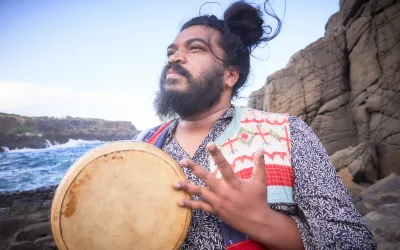
Gaurab Chatterjee
DRUMS, DUBKI
Gaurab “Gaboo” Chatterjee is a renowned drummer based in Kolkata, India. His rock band, “Lakkhichhara”, is one of the most popular bands in Kolkata and the rest of Eastern India.
Beyond his drumming, which encompasses rock and roll right through to traditional Baul percussion instruments like the dubki, Gaurab directs music for films. He made his debut as a music director in the Bengali film industry with the films “Kagojer Bou” and “Necklace”. He is also a sought after session musician who has worked and played with many high-profile musicians including iconic tabla maestro Bickram Ghosh.
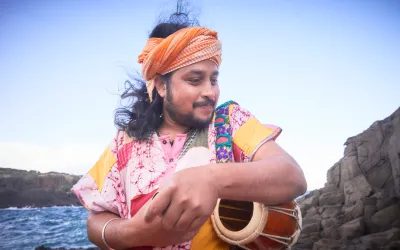
Raju Das Baul
Lead singer, Khamak
Lead singer, Khamak
The Three Seas’ lead singer and khamak player Raju Das Baul has been singing and performing in the ancient Bengali tradition of Baul from the tender age of four years old.
Trained initially by his father, Sridam Das Baul, Raju is currently a disciple of the internationally acclaimed Baul singer Sottonando Das Baul and is rapidly gaining recognition as a prodigy in this mystical performance art. Raju has already recorded a number of albums with other leading Baul musicians and has featured in a major television documentary on the Baul. When he is not touring the world with his music, Raju lives and teaches Baul singing in Shantiniketan, West Bengal.
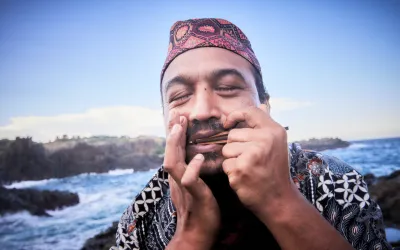
Deo Ashish Mothey
LEAD VOCALS, DOTORA,
ESRAJ, GUITAR
Deoashish Mothey is a singer and multi-instrumentalist who was raised in the Chamong tea garden of Kalimpong, Darjeeling, a lush green region of the North Eastern Himalayas.
Deoashish studied music at Visva-Bharati University, Shantiniketan where he learnt Esraj (a bowed Indian classical instrument) with professor Buddha Dev Das and Vishawa Bharati Sangeet Brawn.
He has also been greatly inspired by regional folk music from Bengal and Nepal and his fluency in the musical instruments and traditions of the region brings a fresh dimension to The Three Seas musical project.
Deoashish is also a talented composer and regularly performs his own compositions on guitar, dotora, duggi and various percussion instruments. In recent years, Deoashish has devoted his time to his role as project coordinator and musical director of the Warnamala Project, an animated musical educational program aimed at encouraging children to learn the Nepali alphabet.
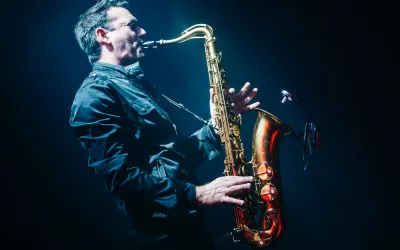
Matt Keegan
SAXOPHONE, ARTISTIC DIRECTOR
Saxophonist Matt Keegan regularly performs throughout Australia and around the world. In 2011 he won the prestigious Freedman Jazz Fellowship.
As a project leader of 20 years experience, Keegan has produced and released 7 albums that feature his prolific work as a composer, arranger and soloist.
As a sideman Keegan is currently a member of bands including; The Phil Slater Quintet; the Steve Hunter Band; Garfish; Sarah Belkner; The Stu Hunter Band; and Elysian Fields. In composer mode he has been commissioned to write works for the Australian High Commission in Thailand; The Zephyr String Quartet; and Elysian Fields. He has also arranged the music for the horn section in projects led by artists including; Passenger; Jimmy Barnes, Emma Pask; Pat Powell; Ray Beadle; and The Voice.
Instrumentation
Whilst Indian classical music and jazz have enjoyed a long association, The Three Seas music draws on the earthier sounds of folk music with a strong focus on the Baul tradition, and playfully creates new musical pathways using a contemporary jazz framework and western production aesthetics. The Three Seas employs a menagerie of traditional North Indian instruments alongside electric and double bass, saxophone and drum kit.

The Khamak
(strummed percussion) is a one headed drum with two strings attached to it that are strummed with a plectrum made from buffalo horn and pulled to alter the pitch to dramatic effect.
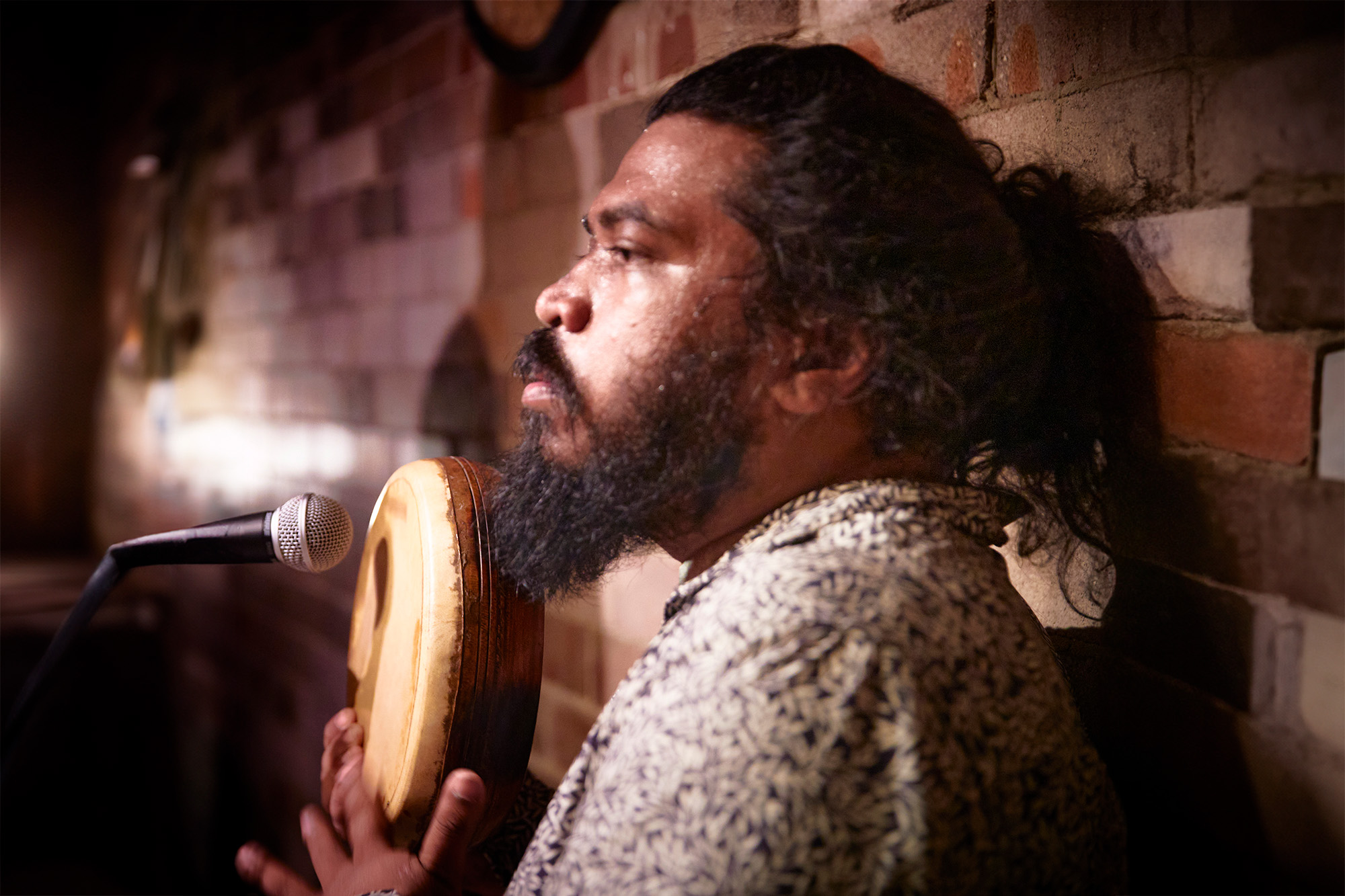
The Dubki
(hand drum) is a single headed drum designed to be held in one hand and struck with the fingers of the other. The pitch can be altered by the hang holding the instrument by pressing the fingers against the skin.<
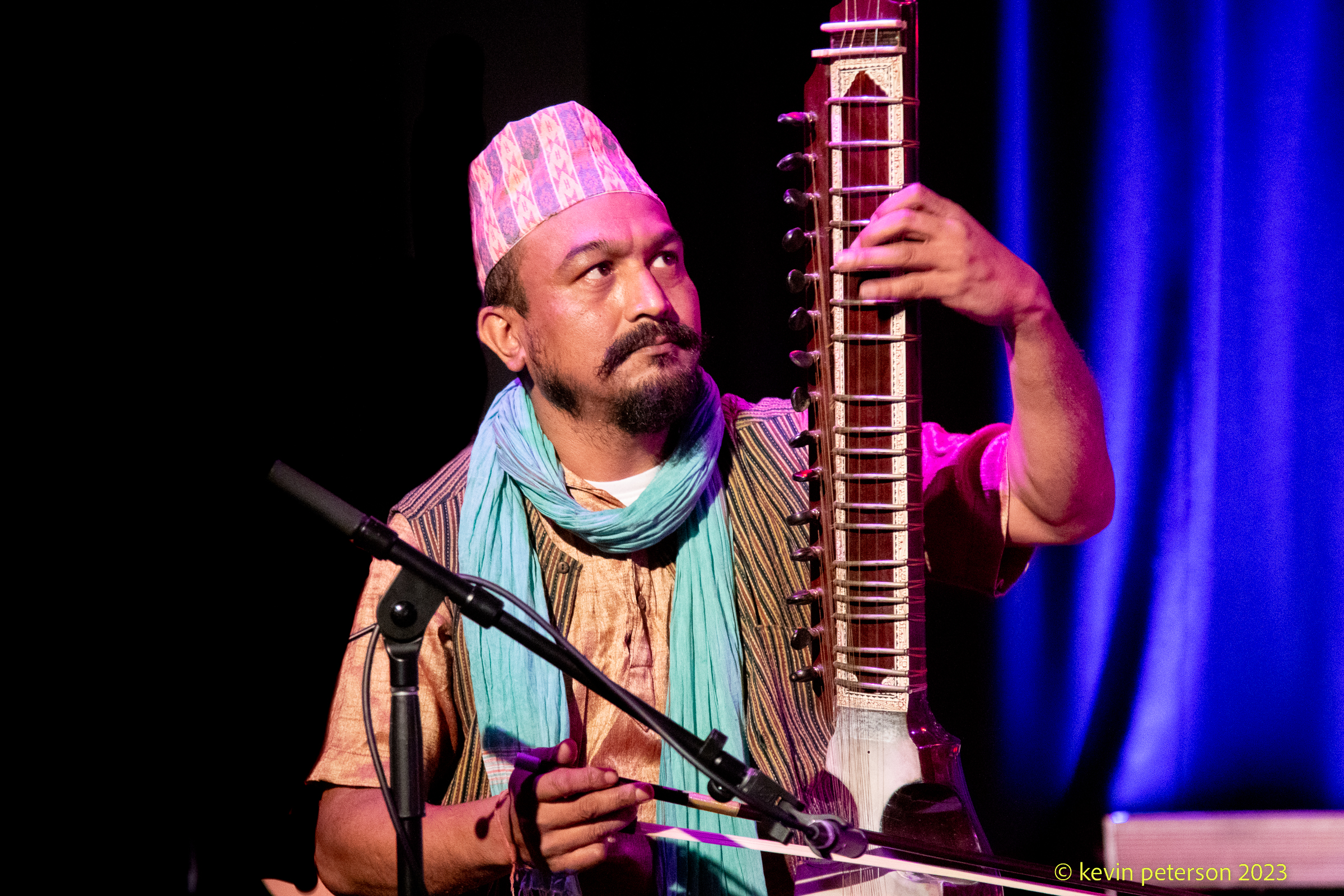
The Esraj
(bowed fretted harp) has four main strings which are bowed, a medium length sitar like neck that has 20 metal frets and a rack of 12-15 sympathetic strings. It is rested on the knee of the sitting player.
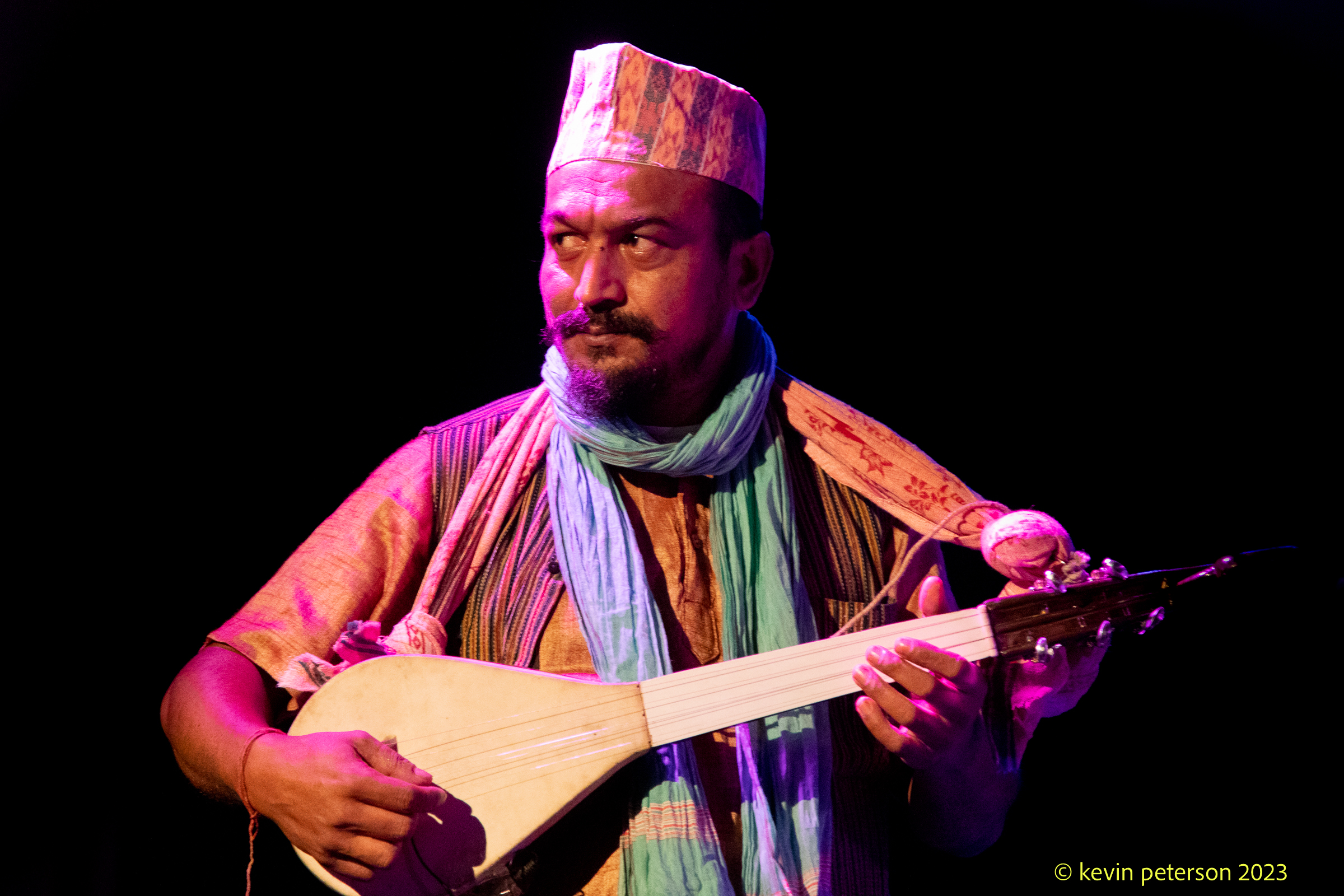
Dotara
(Bengali banjo) is a fretless string instrument that sounds and is played in a similar fashion to the banjo. Although Dotara means two strings – most have three or four. Two are used to finger and change pitches while the others are employed to create drone and resonance.